
From concentration to impact: how a DAF can help diversify appreciated holdings
Caleb Lund, Director, Charitable Strategies Group, DAFgiving360®
Key Takeaways:
- Market concentration has reached historically high levels, leaving many investors with significant exposure to a small number of stocks.
- Donating appreciated assets to a donor-advised fund (DAF) can help reduce concentrated positions while potentially avoiding capital gains taxes and supporting charitable goals.
- A systematic approach to DAF contributions may help investors diversify over time and reduce the challenge of timing charitable gifts and portfolio decisions.
- For charitably-inclined clients, incorporating giving discussions into portfolio rebalancing conversations can create benefits for both financial and philanthropic objectives.
Concentration in the stock market has reached its highest level in more than 50 years.1 The top 5 stocks in the S&P 500 index currently account for about 30% of the market capitalization, rivaling levels last seen in the late 1990s during the last tech stock boom.
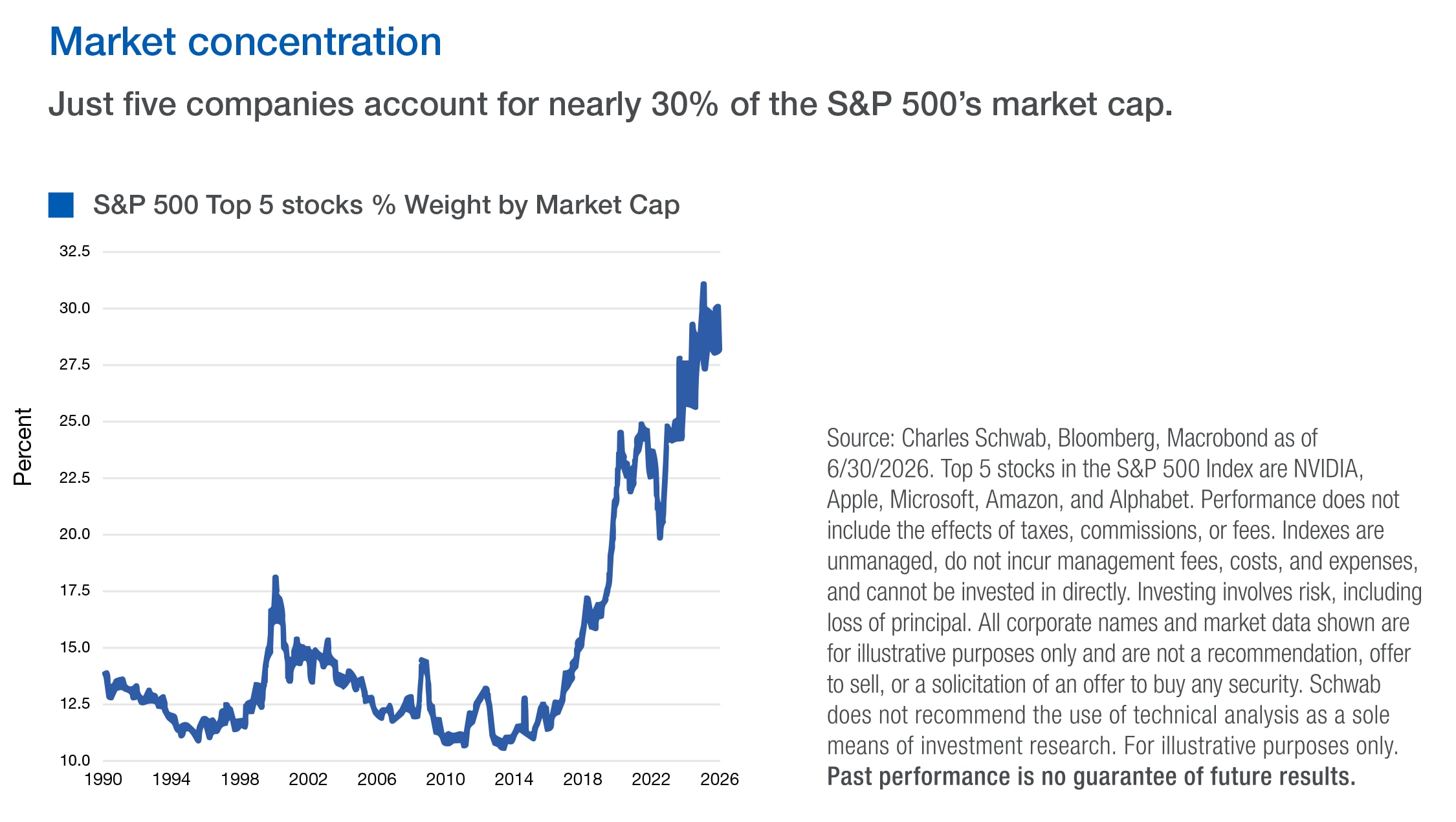
Based on history, we know that when market gains are driven by a relatively small group of stocks, returns can disappoint once investor sentiment shifts. Today, that concentration isn’t limited to the U.S. market. It appears to be a global phenomenon, making diversification even more challenging.
Addressing the dilemma
The higher the level of concentration, the more important it is for financial professionals to discuss the benefits of portfolio diversification. However, investors often hesitate to realize large capital gains due to the tax consequences or the prospect of giving up the potential for more growth.
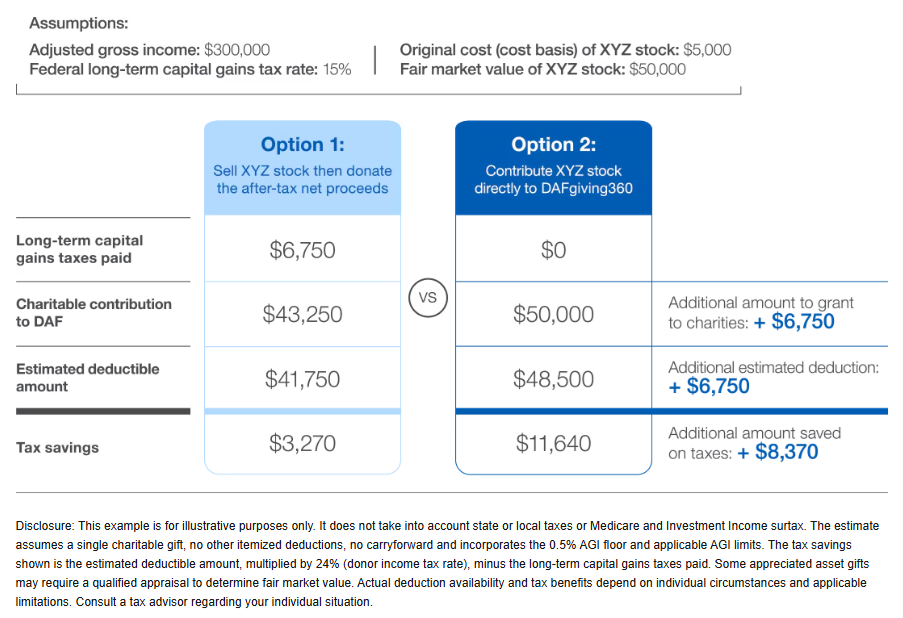
One way to address the issue is to donate some portion of the appreciated assets to a donor-advised fund (DAF) such as DAFgiving360®. Contributions of assets held more than one year may help donors avoid capital gains tax and be eligible for an income tax deduction up to 30% of adjusted gross income, if they itemize deductions.
By donating the stock to a DAF, tax savings can mean more money available for charity and the potential for further investment growth in a DAF account over time. For example, selling stock that has sharply increased in value, paying the tax, and then contributing to charity means having less money to deploy.
A systematic approach
Setting up a program for regular DAF contributions can help address timing concerns. Much like dollar cost averaging when investing, a systematic approach to rebalancing a portfolio and donating assets can help reduce the challenge of trying to time the market. Instead of waiting until year-end, investors may choose to make contributions throughout the year as part of an ongoing diversification strategy.
In some cases, donors may pair charitable contributions with the sale of appreciated shares, donating a portion of the position to a DAF while selling another portion. This approach may help offset some of the tax impact of the sale while reducing concentration over time.
Market volatility is always a potential risk and can interfere with charitable giving plans. Spreading contributions over time may make the process more manageable by reducing the need to make those difficult market timing decisions.
Matching donations to a timeframe can help maximize the charitable impact by reducing the risk that funds are not available when a donation is planned or most needed. Charitably-inclined investors may welcome the opportunity to incorporate discussions about giving into regular portfolio rebalancing conversations.
A DAF can help make difficult decisions easier
Given the recent narrowing of gains in the stock market, financial professionals may want to consider identifying clients with concentrated portfolios and discuss the concept of adopting a systematic approach to making charitable contributions to a DAF. The benefits of reducing portfolio risk with diversification, along with the potential to have a greater charitable impact, is likely to resonate with clients.
Talk to clients and explore a DAF
A DAF account from DAFgiving360 is a simple, tax-smart investment solution for charitable giving. For clients with concentrated positions and charitable intent, consider making charitable giving part of your next portfolio rebalancing discussion. Learn why more than 5,400 independent advisors work with DAFgiving360 to support their clients' philanthropy.2