
How to make Giving Season a family tradition
Download a PDF of this article
Practical ways to bring your family together around charitable giving, shared values, and traditions that can last across generations.
Key takeaways
Giving Season is a time to come together as a family and talk about charitable giving.
Family conversations can help clarify your shared values and decide where to focus your support.
Giving together can build traditions that carry your values across generations.
For many families, year-end is a time for charitable gifts, but it can also be the start of a lasting family tradition. With everyone gathered in November and December, it’s a natural time to reflect on what matters most to you, share stories about the giving traditions of your parents or grandparents, and talk about the impact you want to make together in the years ahead.
These conversations can help your family clarify its charitable goals, develop a plan to meet and sustain them, and involve future generations in a shared tradition of giving.
Start with what matters to your family
Many charitable conversations begin with a simple question: Which charities should we support this year? But if you step back and first talk about what's important to your family and the meaning (the why) behind those values, the answer can become much clearer.
Your family members will each bring their own interests and priorities to the conversation. Those different perspectives can help you identify where your values overlap and what you hope to accomplish together.
Starting with that common ground can help turn individual giving decisions into a more intentional approach that reflects your family’s shared priorities.
Learn from different generations
One of the strengths of family giving is the range of experiences and viewpoints each generation brings.
Use holiday gatherings to get the conversation going. Ask parents or grandparents why they’ve supported certain causes and what traditions they’d like to continue. Then invite younger generations to share what they care about. Don’t worry if opinions differ—a debate over local versus national versus global needs, for example, often leads to a richer conversation.
Different perspectives can help family members better understand what matters to one another and open the door to new ideas. Consider David and Maria. They have supported many of the same causes for years, while their adult children have developed charitable interests of their own. During a Giving Season gathering, they invite everyone to share a cause that matters to them and why. The conversation surfaces some shared priorities, along with new ideas the couple hadn’t previously considered.
These conversations matter: six in 10 DAFgiving360® donors say family members are at least moderately influential in choosing which charities they support.1 And, adult children are significantly more likely to give when their parents set the example.
What each generation can bring:
Grandparents: A long-term view, established traditions, community ties
Parents: Current priorities, family experiences, practical know-how
Younger generations: New causes, fresh ideas about impact, new ways to get involved
Turn your shared vision into a giving plan
Family giving often becomes more powerful when it moves beyond individual donations toward a shared plan. Start by talking about what you value most, what you want future generations to carry forward, and how individual interests can fit within your family’s shared goals.
Once you’ve identified those priorities, consider a few practical questions:
How can different family members participate?
How do we support our priorities over time?
What would meaningful impact look like for our family?
How can we prepare future generations to take part?
As your goals take shape, you might look at tools that make it easier to give together for years to come. For some families, a donor-advised fund (DAF) is a good option. It lets you set aside charitable dollars now and recommend grants to charities over time, with room for the whole family to join in.
Build traditions that last
Traditions turn giving from a once-a-year transaction into an ongoing family practice—one that gives everyone a role to play. And they do not have to be elaborate. Here are a few simple ways to get started:
Reflect together: Look back on the past year’s giving and what you learned.
Give together: Recommend grants, support causes, or volunteer as a family.
Plan together: Revisit your priorities and set goals for the coming year.
Gather together: Make these conversations part of November and December gatherings.
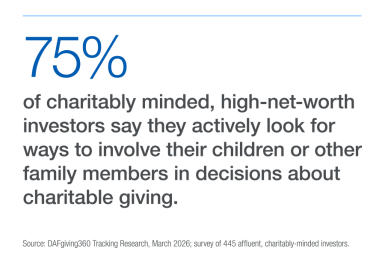
Pass on your values, not just your assets
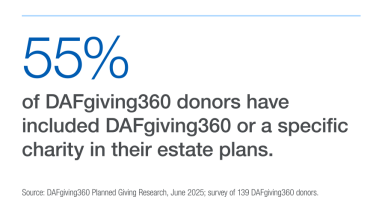
A charitable legacy starts with sharing your story. Talk with children and grandchildren about why certain causes matter to you and the experiences that shaped your giving. If you hope those charitable goals will continue beyond your lifetime, consider how they fit within your broader estate plan.
Just as important, give the next generation a meaningful role today. Younger family members can research charities, recommend grants, or even lead a family giving discussion. Participation gives them the experience they can draw on as family traditions continue.
A DAF can also help you plan for how your family’s giving continues. With a DAFgiving360 account, you can name family members or others as successors to carry on your charitable giving or establish a DAFgiving360 Legacy Program to recommend how remaining account assets should be granted to charities.
Over time, David and Maria’s Giving Season conversations become part of their family’s annual tradition, and their adult children take a more active role in charitable decisions. As they think about the future, the couple names family members as successors to their DAFgiving360 account, helping create continuity for the family’s charitable giving across generations.
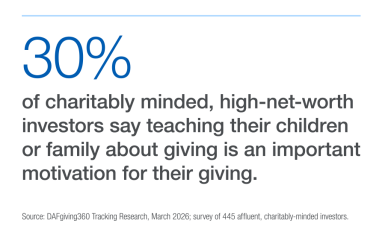
How a donor-advised fund can support your family’s giving
As your charitable goals become more intentional, you may want a way to organize, sustain, and grow your giving over time. A DAF can give your family a dedicated place to turn conversations into action—and give every generation a way to take part.
A DAF can help your family:
Give together through a dedicated charitable account that can bring generations into giving conversations and grant decisions.
Set aside and potentially grow charitable assets by contributing cash or other eligible assets, investing them for potential growth, and recommending grants over time.
Give on your own timeline by separating when you contribute from when you recommend grants to charities.
Plan for how your giving continues by involving family members today and considering succession or legacy options that can help carry your charitable intentions forward.
In fact, 13% of DAFgiving360 donors say they’ve already used their DAF for succession planning—passing their giving on to the next generation—and 30% expect to use it that way in the future.2
Giving Season can be a natural time to review your family’s charitable priorities, discuss who you’d like to involve, and consider how your giving can continue in the years ahead.
Learn more
Start a tradition worth continuing
The conversations you start this Giving Season can shape how your family gives for years to come. By giving everyone a voice, you can turn shared values into traditions that grow and evolve with your family.
Ready to put your family’s giving plans into action? Log in to your DAFgiving360 account, or explore opening an account to get started. For more ideas and guidance, visit DAFgiving360’s family philanthropy resources to help engage your family in giving, or visit the DAFgiving360 Year-End Giving Resource Center for checklists, deadlines, and planning resources to help your family make the most of Giving Season.
Family giving FAQs
Start with values rather than specific charities. Ask what causes matter most, what experiences have shaped your family’s giving, and what kind of impact you hope to make together. Giving Season and family gatherings can provide a natural opportunity to begin the conversation and hear the perspectives of different generations.
Give younger family members an active role in the process. Invite them to share the causes they care about, research charities, participate in volunteer activities, or recommend grants. Giving them a voice in charitable decisions can help them build their own connection to giving while learning about your family’s values and traditions.
Your family doesn’t have to agree on every cause. Start by identifying the values and goals you share, then look for ways to balance collective priorities with individual interests. Different perspectives can strengthen your family’s giving by introducing new causes, ideas, and ways to make an impact.
Charitable giving focuses on how you support the causes you care about today. A charitable legacy looks further ahead, encompassing the values, traditions, and commitment to generosity you hope to pass on from one generation to the next. It can include both the charitable resources you leave behind and the way you prepare future generations to continue your family’s giving.
A donor-advised fund (DAF) can provide a dedicated charitable resource that helps your family organize giving, involve multiple generations, and continue a charitable legacy beyond your lifetime. You can contribute cash or other eligible assets, invest them for potential growth, recommend grants to charities over time, and plan for how your giving continues through options such as naming successors or creating a legacy plan. A DAF can also give children, grandchildren, and other family members a meaningful role in charitable discussions and grantmaking, helping support giving traditions that can continue across generations.